RawTherapy
- Demo
- On request
- My role
- Product design and full-stack development, including the React interface, simulation engine, real-time voice, AI quality checks, and evaluation workflow
- Stack
- React, TypeScript, Fastify, PostgreSQL with pgvector, Redis, OpenAI Realtime API, Voxtral, Playwright
- Info
- AI patient simulation for psychotherapy training.
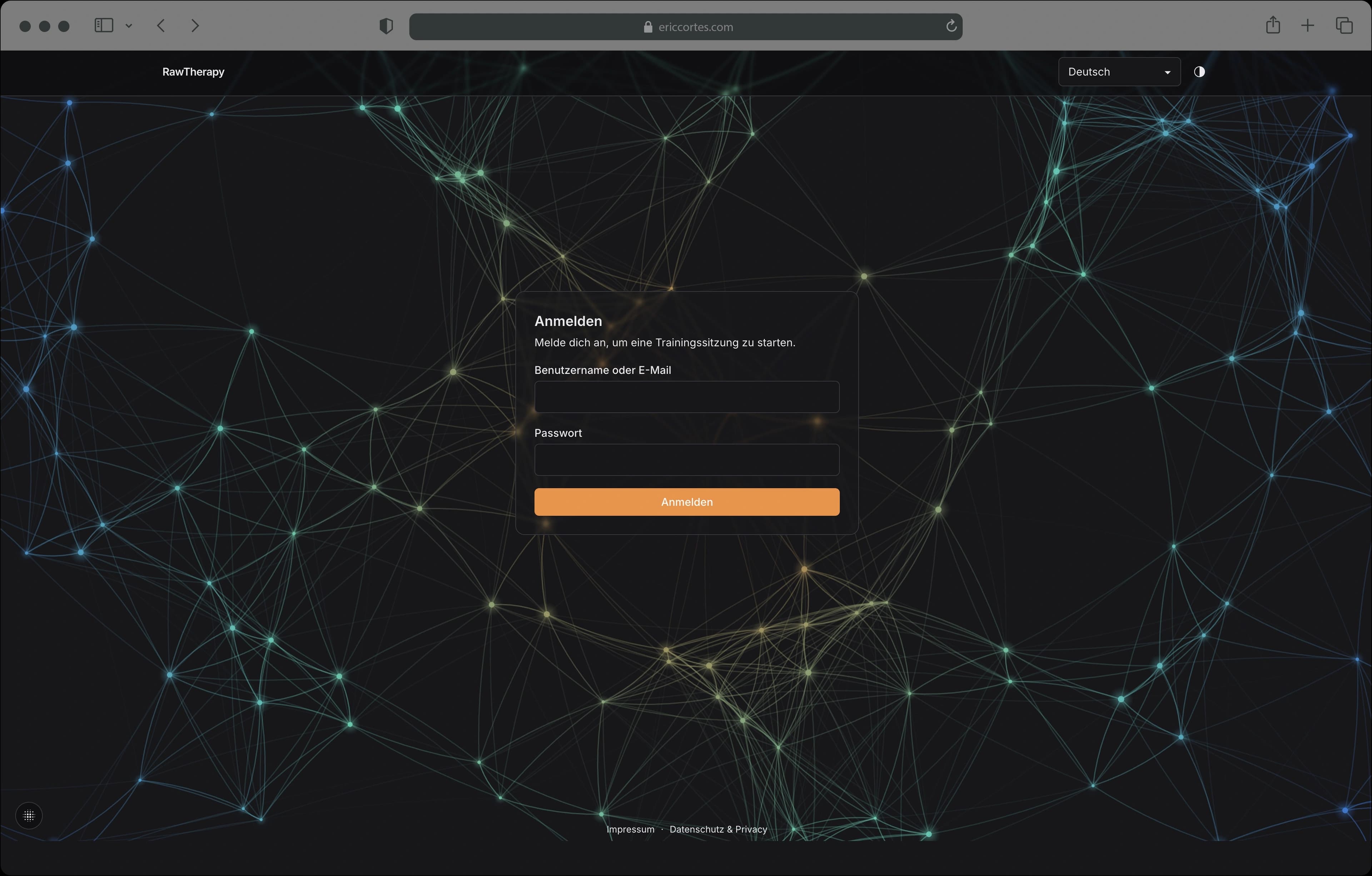
AI patient simulation for psychotherapy training.
RawTherapy lets therapists practise difficult conversations with simulated patients, by text or live voice, in English, German, and Spanish. Each patient has a life story, beliefs, and a way of talking, and reacts to how the therapist approaches them. I designed and built the product, including patient behaviour, the conversation interface, and reply checks.
Who it's for
- Therapists in psychotherapy training
- Therapists practising in English, German, or Spanish
The challenge
- Patients should react to the conversation, not follow a fixed script
- AI replies must stay in character and fit each patient’s history
- Live voice should feel natural, with little delay and reliable transcription
- If the connection drops, the conversation must stay intact, with no duplicate entries
- Feedback should point to specific moments in the session
My approach
- Defined each patient’s beliefs, personal rules, and defence mechanisms. Their responses depend on how the therapist approaches them. They may open up, withdraw, or want to end the session.
- 10 ready-made patients, plus an editor and an AI generator to create your own.
- Used earlier moments in the conversation to inform each patient’s replies.
- The therapist reflects on the session before seeing the report, so their own view isn’t shaped by the feedback. Specialists chose this order.
- Scored five counselling skills with rules instead of AI, so results stay predictable, stable, and easy to explain. The rules look at transcript features such as open questions, reflections, and advice-giving. The session goal sets the focus for practice.
- Every finding in the report cites the exact moment in the transcript, with strengths, areas to improve, and what to practise next.
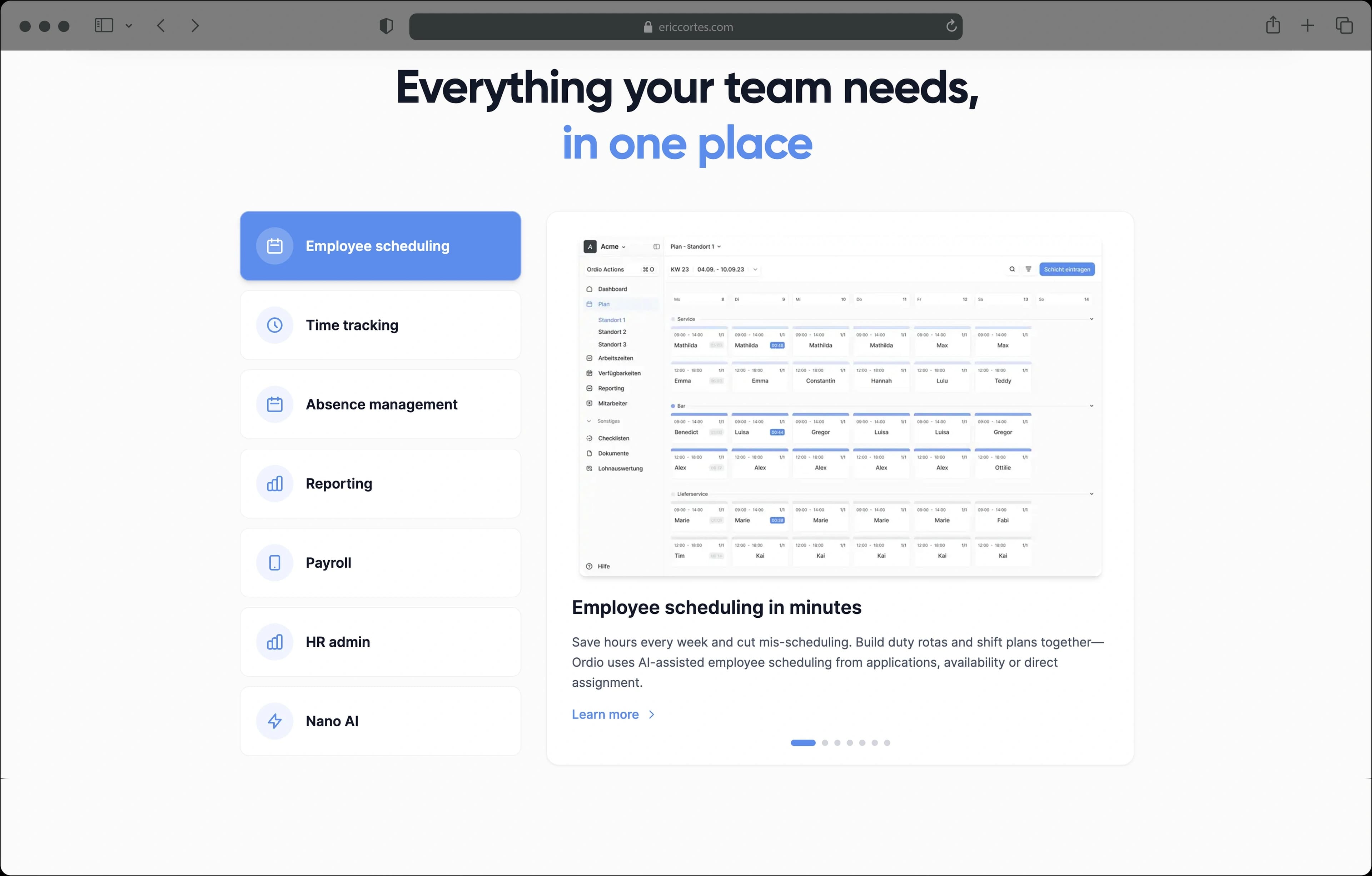
Ordio
Staff scheduling and workforce management.
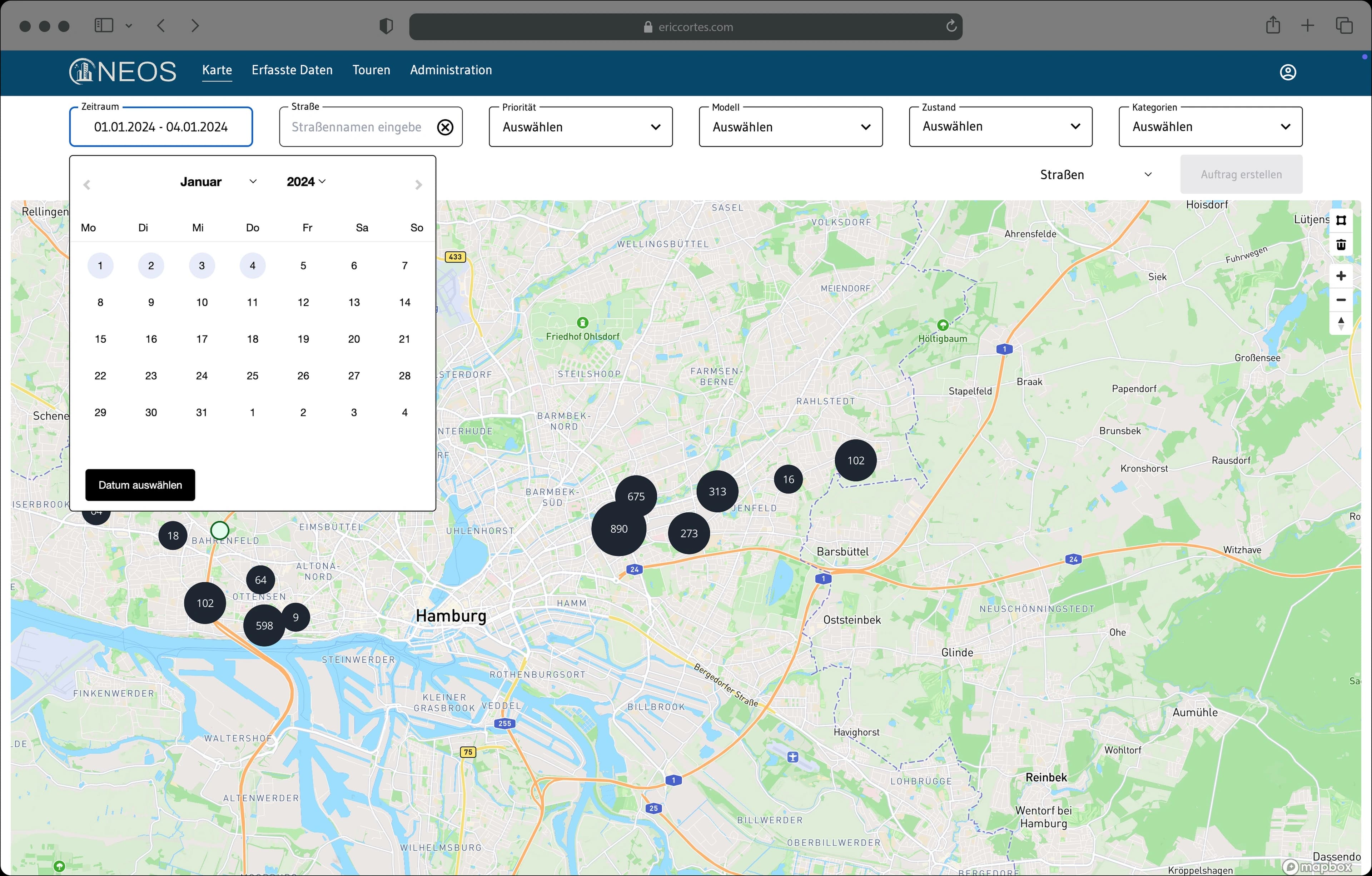
Remondis UI Library + NEOS
Redesigning REMONDIS NEOS.
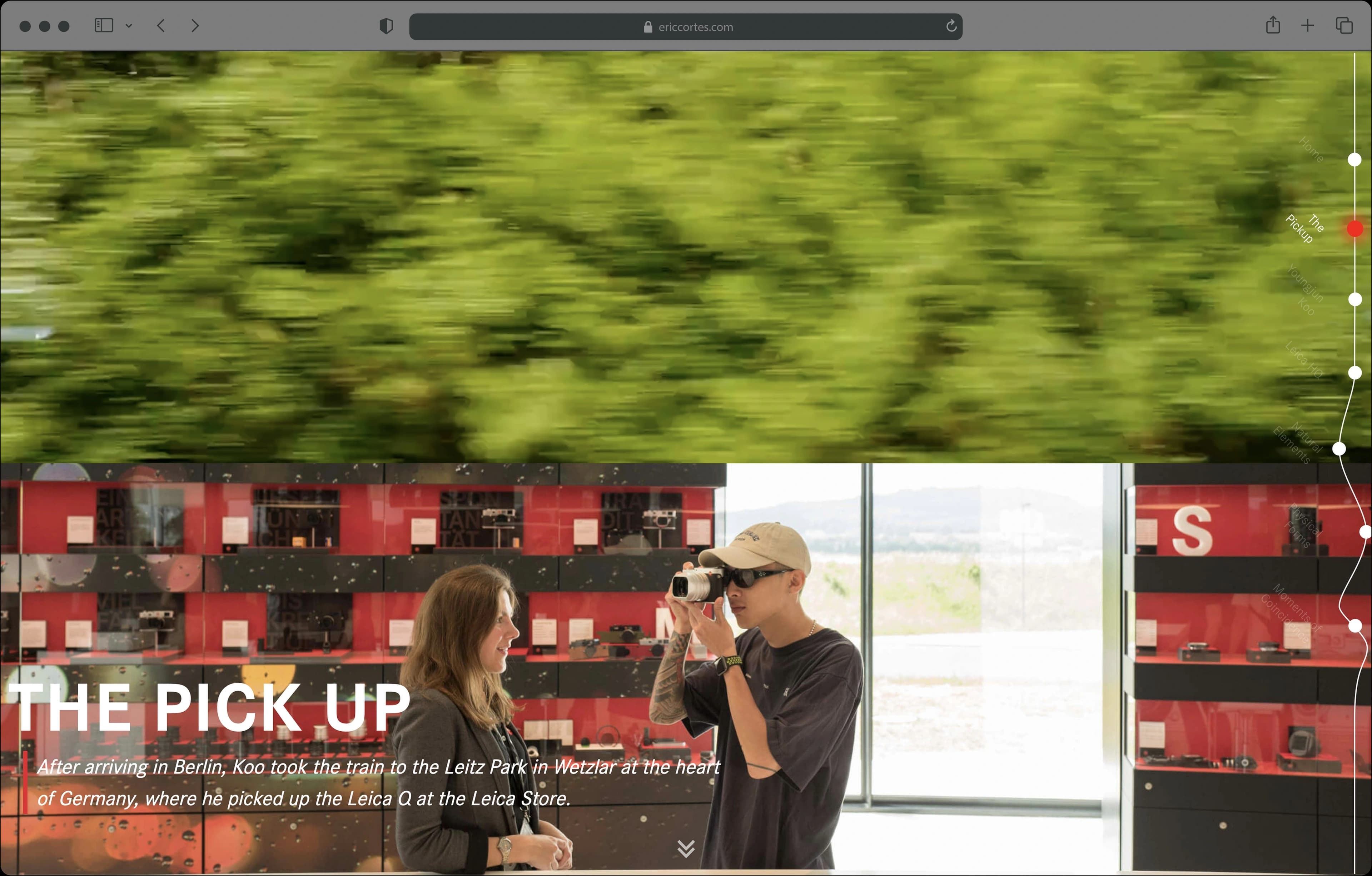
Leica Q Campaign for Virtue Worldwide
An image-led campaign website for Leica Q.
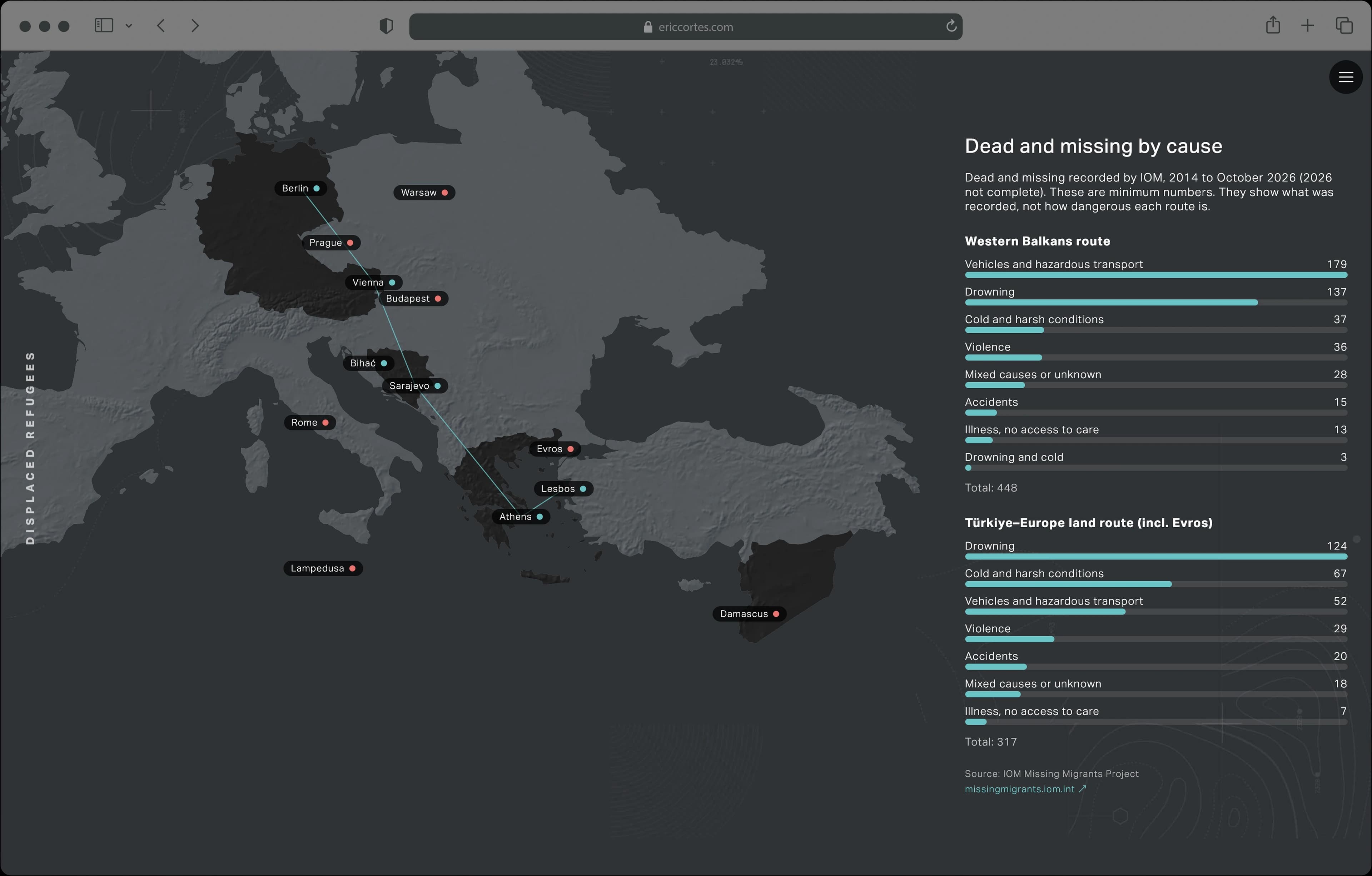
VICE — Balkan Route
An interactive journey along the Balkan refugee route.

Eric Cortés
A portfolio for interactive experiments, photography, and design.